 clipoven
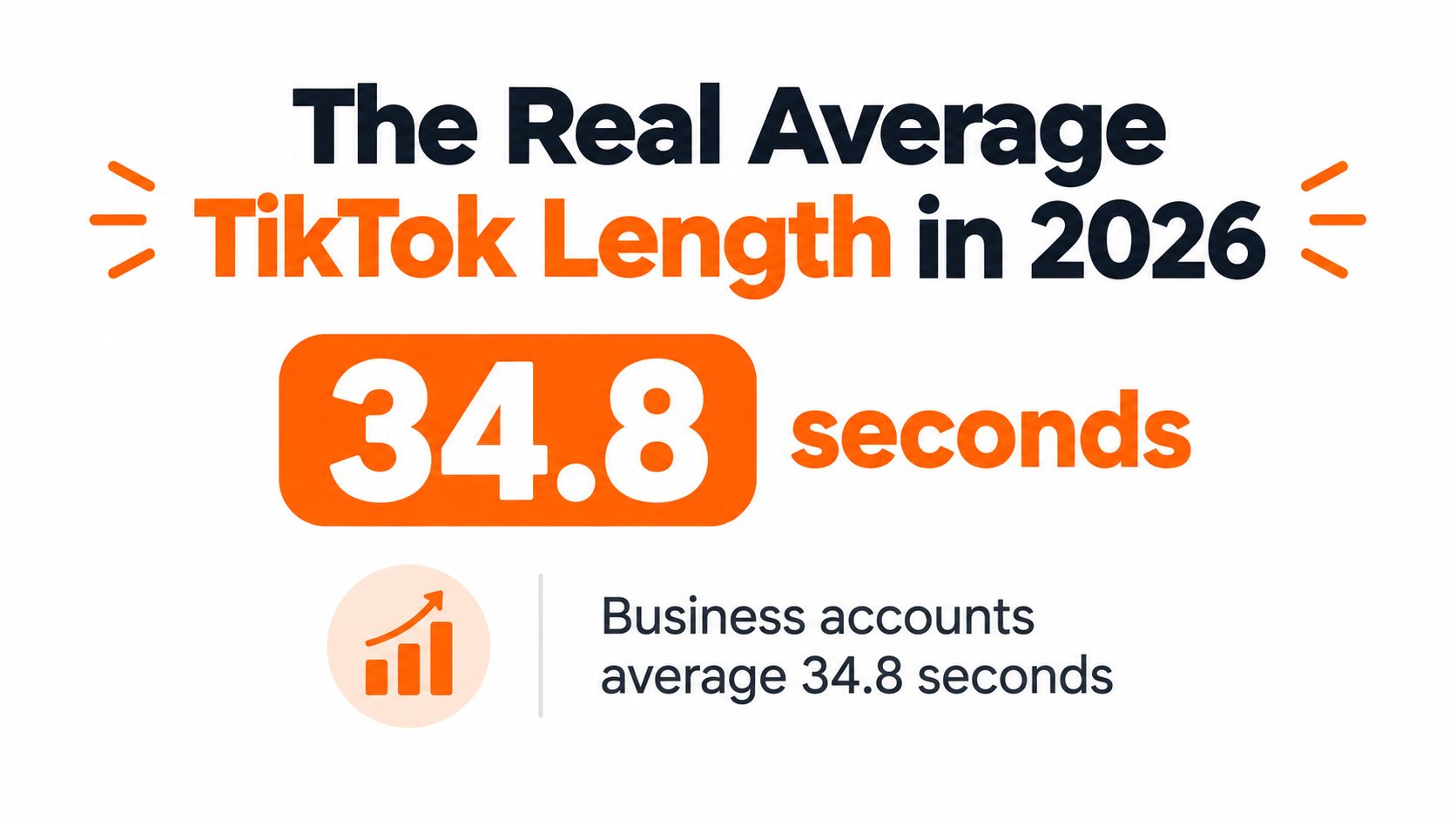
The 2023 Buffer analysis of 3,422,461 TikTok videos found average lengths of 37.7 seconds for business accounts and 39.3 seconds for personal accounts, while the most-viewed videos averaged 54 seconds. That is the data-backed answer to how long should TikTok videos be, and it points to the 30 to 60 second range rather than the old 7 to 15 second myth.
That does not make one duration universal. It means length should follow purpose, because a quick joke, a reveal, and a tutorial do not need the same setup or payoff. The strongest creators choose the runtime that matches the job the clip has to do.
ClipOven’s comparison of TikTok and Reels pacing shows the same editing logic across short-form platforms, even when the best runtime shifts a little from feed to feed.
Table of Contents
- The Real Average TikTok Length in 2026
- How TikTok’s Length Limits Have Expanded Over Time
- What the Data Says About Reach and Watch Time
- Choosing the Right Length by Content Type
- Attention Span and Retention Curves Explained
- Why the 7 to 15 Second Rule Is Misleading
- A Three-Cut Editing Workflow for Every Clip
- Testing Length Across Markets and Audiences
The Real Average TikTok Length in 2026
The cleanest way to reset the conversation is to stop starting with “shorter is always better.” The largest usable baseline in the brief tells a different story, 37.7 seconds for business accounts and 39.3 seconds for personal accounts, with the most-viewed TikToks averaging 54 seconds. In other words, the middle of the market is already living well past the old ultra-short stereotype.
What the averages actually mean
Those averages don’t prove that 37 or 39 seconds is some magical sweet spot. They do show that creators who still plan around a hard 15-second ceiling are working from an outdated mental model. A better frame is to treat 30 to 60 seconds as the most common practical zone, then tighten or extend from there based on the content’s job.
That’s where the duration-by-purpose model starts. A quick reveal, joke, or reaction doesn’t need the same runtime as a tutorial, a stream highlight with context, or a podcast excerpt that needs one beat of setup before the payoff lands. The average gives you a baseline, but purpose decides whether you should shave time off or let the story breathe.
Practical rule: if you can remove seconds without making the idea harder to understand, remove them.
The old “keep it under 15 seconds” advice aged badly because TikTok itself changed. The platform no longer behaves like a pure micro-clip app, and creators shouldn’t edit as if it still does. The point is not to make videos long, it’s to make them long enough to earn their runtime.
How TikTok’s Length Limits Have Expanded Over Time
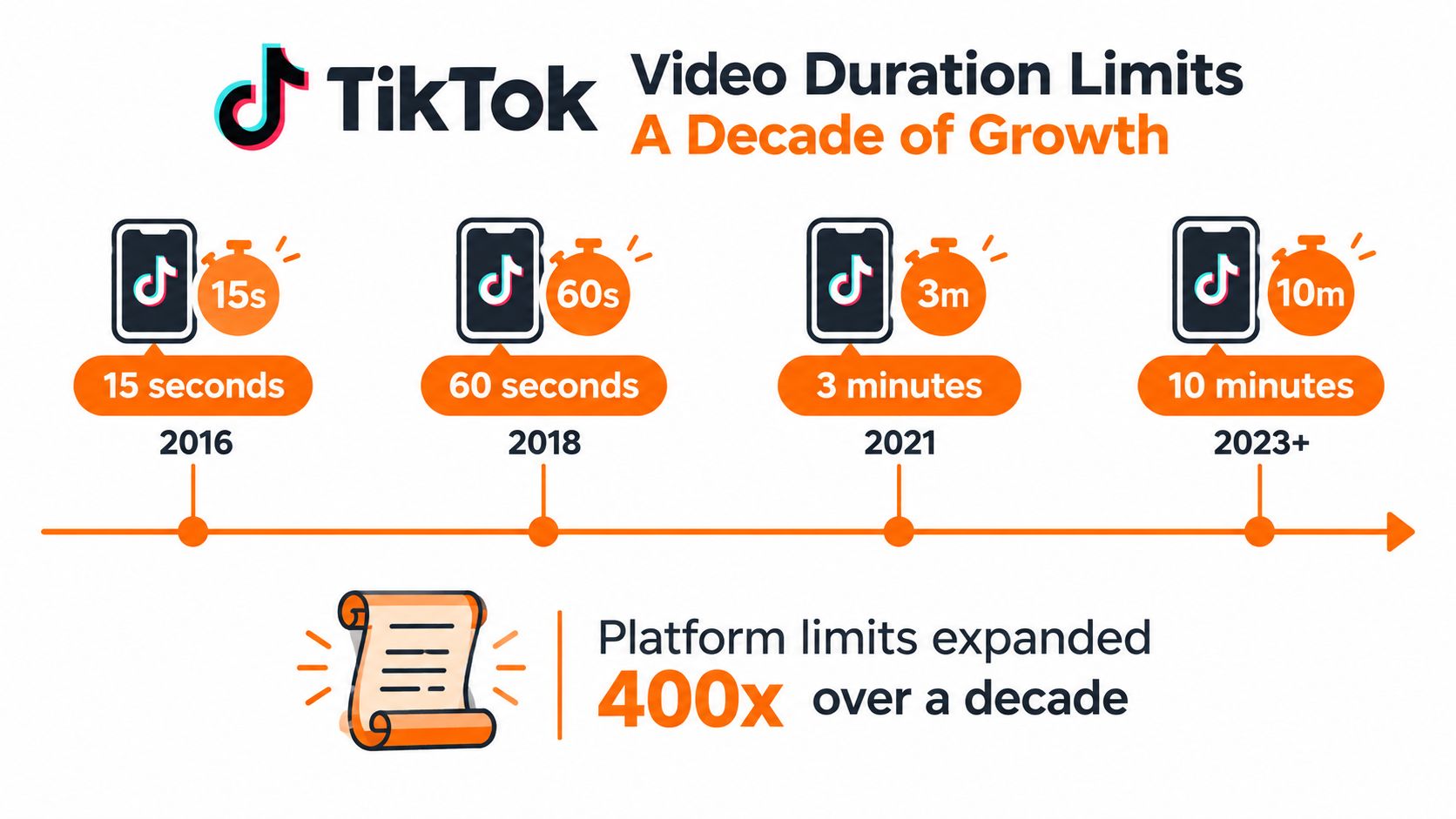
TikTok’s format history matters because it explains why the length question is now strategic instead of mechanical. The platform started with a 15-second maximum, then expanded to 60 seconds, then 3 minutes, and eventually 10 minutes for eligible uploads. That change didn’t erase short-form logic, but it did widen the space for clips that need explanation or narrative payoff.
The feed still favors compact publishing
The same benchmark reporting says roughly 86% of analyzed TikToks remained under one minute, including 33.7% in the 10 to 30 second range and 27.3% in the 30 to 60 second range. That’s the core tension. The platform can now host longer work, but most publishing still clusters below one minute.
So the practical answer isn’t “TikTok allows 10 minutes, therefore make 10-minute videos.” It’s that the ceiling moved far faster than everyday publishing habits did. Most creators still win by staying compact, but the existence of longer limits makes room for clips where trimming harder would damage clarity, comedy timing, or emotional buildup.
If you edit stream highlights, podcasts, gameplay, or interviews, that matters a lot. A reaction often needs a setup beat. A tutorial often needs one extra step to be understandable. A story clip often collapses if you force it into a length that breaks cause and effect.
Duration is no longer a platform cap problem. It’s a packaging problem.
What the Data Says About Reach and Watch Time
The stronger case for longer TikToks is specific, not universal. In the 2025 NetInfluencer analysis, clips over 60 seconds outperformed shorter clips on both distribution and viewing depth. In practice, that means a longer clip can do two jobs at once, it can reach more people and keep them watching long enough to matter.
Reach and watch time are different outcomes
That distinction matters because reach and watch time do not solve the same problem. Reach helps if you want more first-time viewers, more profile visits, or more chances to convert a cold audience. Watch time matters more when the clip needs explanation, emotional buildup, or proof before the viewer acts. A clip that earns more reach but loses the room halfway through is useful for awareness, not for retention-heavy goals.
The practical reading is simple. Longer clips earn their keep when the extra seconds carry new information, a stronger payoff, or a clearer reason to stay. If the added runtime is just padding, the lift disappears. If the extra time changes the shape of the story, the format can outperform a shorter edit even when the shorter one is easier to package.
A separate 2023 analysis in the brief found engagement rose from 6.09% for 0 to 9 second videos to 6.67% for videos longer than 54 seconds, while personal accounts averaged 6.63% engagement versus 5.15% for business accounts. The gap is real, but it is not magic. It says execution, account type, and content fit still shape results more than runtime alone.
For creators, a 43.2% reach lift is not abstract. On a 10,000-follower account, it can mean a post that reaches a few thousand more people instead of stalling with the usual audience slice. If the clip is tied to a product, newsletter, lead form, or other next step, that extra reach can matter more than a cleaner edit that gets watched but never discovered.
| TikTok Duration Bands vs Reach, Watch Time, and Publishing Share | |||
|---|---|---|---|
| Duration | Share of TikToks | Reach vs Shorter Bands | Best Use Case |
| Under 1 minute | About 86% of analyzed videos | Baseline publishing norm | Fast edits, simple hooks, quick payoff clips |
| 10 to 30 seconds | 33.7% of analyzed videos | Baseline publishing norm | Single idea, reveal, reaction, highlight |
| 30 to 60 seconds | 27.3% of analyzed videos | Baseline publishing norm | Most edited highlights, short stories, compact explainers |
| Over 60 seconds | Not stated in the brief | Higher reach and watch time than shorter clips in the 2025 study | Narrative clips, tutorials, deeper context |
The useful question is not which length wins on paper. It is which duration gives the viewer enough context to finish, share, or convert without wasting seconds on filler. Track reach, average seconds watched, completion, and shares, then judge length by the outcome you need.
Choosing the Right Length by Content Type
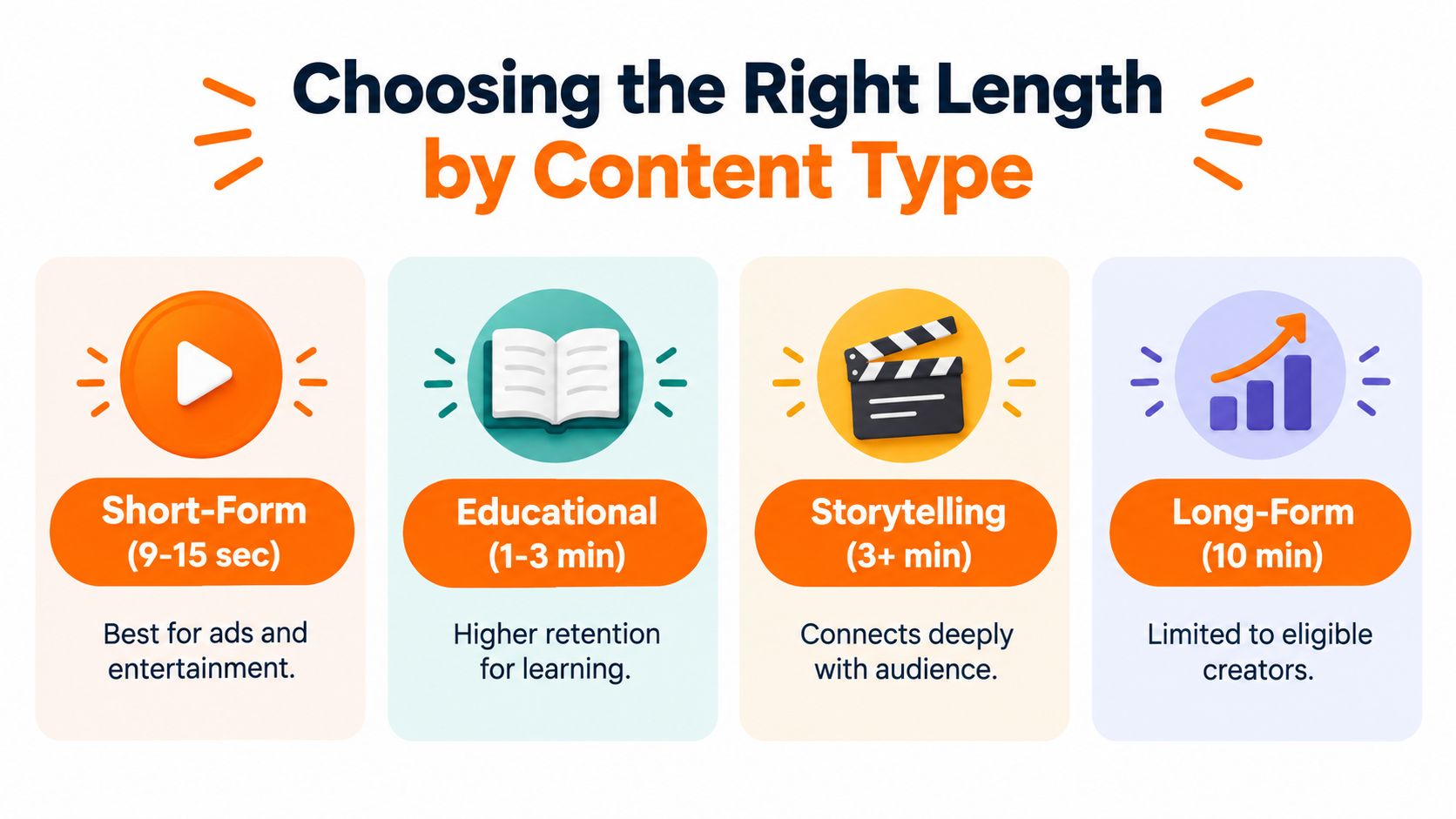
TikTok’s own in-feed ad guidance recommends roughly 9 to 15 seconds for creative while allowing 5 to 60 seconds in-feed ads. That’s a useful floor for simple, high-clarity content, because every extra second creates another chance for a viewer to swipe before the payoff lands. The more complex the idea, the more you can justify stretching beyond that floor.
Match runtime to the job
For single-payoff clips, the best starting point is 10 to 15 seconds. That fits quick gaming wins, reaction shots, product reveals, and punchline-first podcast cuts. The payoff should arrive almost immediately, because the entire clip is built around one decisive moment.
For edited highlights with one explanatory beat, 20 to 35 seconds is usually the cleaner lane. That’s long enough to show the setup, the turn, and the result without drifting into padding. It’s also the range where many stream clips and social cutdowns feel complete without becoming sluggish.
For tutorials, stories, and context-heavy clips, 45 to 60 seconds is a stronger fit. The extra time earns itself if the viewer needs one more step to understand why the result matters. A product demo, a creator breakdown, or a podcast excerpt with setup and release often belongs here.
For longer narrative or explanation-led clips, go past one minute only when the content requires that runway. The brief’s engagement data shows that longer clips can work, but the runtime should reflect the structure of the idea, not the creator’s fear of cutting.
ClipOven’s repurposing guide is relevant here because the same source clip can usually support more than one runtime. One version can be tuned for fast discovery, another for fuller explanation, without forcing every audience segment to accept the same cut.
Payoff rule: place the reveal, answer, or reaction earlier than you think, then let the remaining seconds justify themselves.
Attention Span and Retention Curves Explained
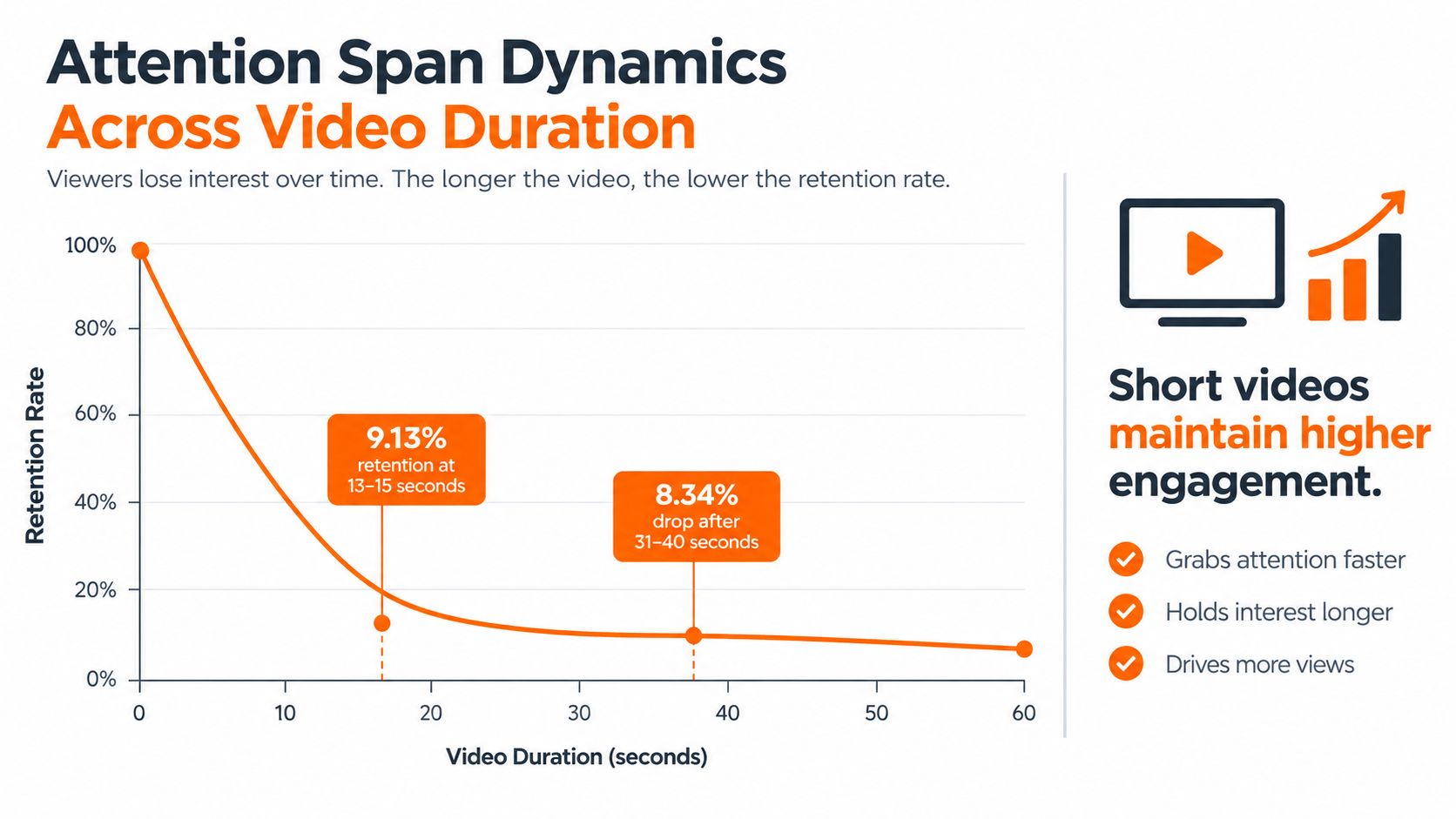
Retention data matters because it tells you where a video loses people, not just whether it was long or short. A Monash review of educational video audiences found very high retention below 3 minutes, with retention dropping more quickly as duration increased. A separate online-learning study found short videos increased median engagement time by 24.7% compared with a long-video group.
Read the curve, not the category
Those studies aren’t TikTok-specific, but the principle transfers cleanly. Each extra beat adds cognitive load, so the question becomes whether the added time delivers information or emotional payoff that viewers can’t get any earlier. If it doesn’t, the curve usually flattens before the ending.
A healthy TikTok retention graph should do three things. It should hold attention through the opening hook, avoid a sudden collapse in the middle, and stay stable enough near the end that the payoff feels earned. If viewers disappear before the reveal, the problem is usually structure, not just length.
A short clip that finishes strongly is better than a longer clip that reaches the point too late.
For creators, the analytics screen should answer a few simple questions. Did people leave before the setup finished? Did the midpoint drag? Did the payoff arrive after the audience had already decided to move on? Once you know that, the fix is usually obvious, move the answer earlier, cut dead air, or shorten the setup until the curve steadies.
Why the 7 to 15 Second Rule Is Misleading
The “7 to 15 seconds” rule feels tidy, but it treats one runtime as a universal answer. The better reading is more conditional. A 15-second cut can work when the idea is instantly legible. A longer version can win when the clip needs setup, sequence, or a payoff that lands late.
That is why the rule keeps surviving in creator advice. Short clips are easier to script, easier to edit, and safer to publish, so the guidance spreads even when performance data points in a more mixed direction. The habit also comes from confusing production convenience with audience preference.
A concrete example makes the trade-off clearer. A product demo forced into 15 seconds often loses the explanation that makes the result believable. The same idea at 45 or 60 seconds can hold attention if the clip shows the problem, the process, and the outcome in order. Cut that version too hard, and the value often disappears before the payoff arrives.
The key decision is not short versus long. It is whether the runtime matches the job of the clip. Fast answer clips should stay tight. Tutorials, commentary, and transformation stories usually need more room, because the audience is not just waiting for a punchline, it is following a sequence that has to make sense.
A Three-Cut Editing Workflow for Every Clip
The safest production habit is to make multiple cuts from the same source instead of betting on one length. The goal is to test how much runtime the idea can support before attention drops. That approach lines up with the brief’s retention findings and the ad guidance that favors compact in-feed creative.
Build three versions before you post
Start with a 10 to 15 second hook-and-payoff cut. Put the strongest moment first, strip out greetings, and keep the edit focused on the single most satisfying beat. Judge this version by completion and rewatch signals.
Then create a 20 to 35 second explanatory cut. Leave one setup beat in place so the viewer understands why the payoff matters. This version usually works best when the clip needs a little more context without losing momentum.
Finally, keep a 60 second or longer version for moments that genuinely need room. That’s the cut for layered storytelling, detailed demonstrations, or commentary where the value comes from the full arc, not just the punchline. If the viewer drops before the payoff, the long version isn’t failing because it’s long, it’s failing because the structure is off.
Use the shortest cut that still makes the result understandable, then keep a longer cut only when the story truly asks for it.
Tools like ClipOven can help with the mechanical side of this workflow by converting horizontal footage into vertical clips, assembling cuts, and refining captions and pacing in one place. The point isn’t automation for its own sake, it’s making three viable durations without turning editing into a separate project.
Testing Length Across Markets and Audiences
The final mistake is assuming one duration should work everywhere. Tokportal’s 2025 benchmark reporting said optimal TikTok length varied by as much as 40% across 11 markets, and 21 to 30 second clips averaged 18% higher completion than 31 to 45 second clips in the analyzed sample. Those numbers are directional, not universal, but they’re enough to kill the idea that duration works the same way in every audience.
A simple testing loop
First, cut the same concept into at least two versions, one compact and one with more context. Second, publish them with the same creative premise so the length is the main variable. Third, compare watch time per impression, completion, shares, follows, and conversions by market or audience segment. Fourth, keep the cut that holds attention without hiding the payoff.
That framework matters because viewer context changes the answer. A gaming audience may accept a setup beat before the reaction. A product audience may need more proof. A regional audience may respond differently to pacing, captions, or the timing of the reveal. Duration is part of distribution strategy, not just editing style.
The decision rule is straightforward. If shortening the clip removes the causal step that makes the result make sense, keep the extra time. If the audience drops before the payoff, move the payoff earlier and trim the setup. And if two versions perform similarly, keep the tighter one because it leaves less room for drop-off.
ClipOven helps creators turn one source video into multiple TikTok-ready cuts, which is exactly what this question demands. If you’re trying to decide how long should TikTok videos be for your own clips, start with the shortest version that still lands the payoff, then test a longer cut when the story needs more room. You can try that workflow at clipoven and build the short, medium, and longer versions without rebuilding the edit from scratch.